
Mackinac Roundtable on Talent
presented by Dynamic Campus
June 28-30, 2026
Grand Hotel, Mackinac Island, Michigan
2026 Theme: “Strategy, Distinction, and Storytelling in an ROI Environment”
About the Event
The Mackinac Roundtable on Talent is a one-of-a-kind, invitation-only gathering advancing student outcomes through cross-sector collaboration.

The Mackinac Roundtable on Talent brings together college and university presidents with senior business and talent leaders to advance one shared priority: student career success.
The 2026 Program
The 2026 Roundtable is anchored by the theme:
“Strategy, Distinction, and Storytelling in an ROI Environment”
The program is designed as an interactive, working forum—not a traditional conference. Participants engage in facilitated sessions, applied scenarios, and peer-level dialogue, guided by nationally-recognized and inspiring speakers in the field.
This year’s program will include a deep dive into institutional strategy and brand alignment, focusing on rising stakeholder expectations for relevance and measurable student success. A management framework and exercises will fuel actionable program takeaways.
A National Platform for Collaboration
Now in its fourteenth year, the Mackinac Roundtable on Talent has become a leading national platform for innovation and collaboration between private higher education and the business community. Each year, new insights emerge that inform institutional decision-making, strengthen cross-sector partnerships, and elevate how colleges and universities tell their story in a results-driven environment.
Held annually at the iconic Grand Hotel on beautiful Mackinac Island, Michigan, the 2026 gathering is expected to include more than 120 college and university presidents, alongside senior corporate and talent leaders, representing 35 states and international destinations.
The Mackinac Roundtable on Talent is an invitation-only event with accommodations, food and program costs complimentary for participants.
2026 Confirmed Speakers to Date
as of May 14, 2026

Sydney Apple
Sydney Apple
Director
Protagonist
Peter Boumgarden
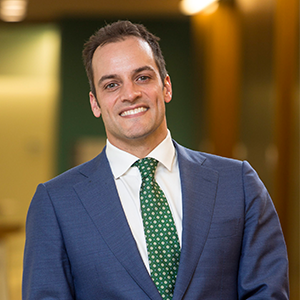
At Washington University, Peter teaches courses on leadership, organizational design, and strategic management within Olin’s MBA, BSBA, Executive MBA, Executive Education, and Brookings Institute programs. Previously to his role at Olin, Peter was an Associate Professor of Management at Hope College in Holland, Michigan. In the sprint of 2018, Dr. Boumgarden was also a Visiting Lecturer in Strategy at Ross School of Business at the University of Michigan. At Olin, Peter is the faculty director of the Center for Experiential Learning and also co-directs the school’s “Healthcare at Olin” strategic planning group, an initiative whose focus is how to best design business education to creatively disrupt the healthcare space. In his teaching with executives outside of Olin, Peter is an Associated Faculty at the Ross School of Business and a Faculty Affiliate at the William Davidson Institute at the University of Michigan—a center on business in emerging markets. In 2015, the National Science Foundation selected Dr. Boumgarden as an entrepreneurial mentor in its I-Corp program, a model for bringing high-impact technology from university to market.
Continuing his work in the entrepreneurial space, Peter acts as an advisor to both an early-stage healthcare finance company and a mining/trade finance company based out of Johannesburg, South Africa. Specific to service, Peter has served on the board of several non-profits within the West Michigan and St. Louis markets. Dr. Boumgarden completed his Ph.D. in Strategy and Organizations at Washington University in St. Louis, Olin Business School in 2010 where he won the Hubert C. Moog Scholarship for excellence in doctoral research. At Olin, Peter researched the link between structural change and long-term organizational performance (USA Today and Hewlett-Packard), the biases of investment in corporate innovation (Bunge Global), and the relationship between team structure and innovation (Intel). He is currently engaged in a project on analyzing early-stage investment strategies in the venture capital industry, and assessing the historical design of the modern business school and its implications for the transfer of social science technologies to market. His academic work appears in Organization Science, Strategic Management Journal, Personnel Psychology, and Judgement & Decision Making. His practitioner work appears in the online arms of Harvard Business Review and Stanford Social Innovation Review, amongst others.
Areas of Expertise:
Organizational Strategic Design, Venture Capital, Organizational Structure and Change, Talent Analytics, Entrepreneurship & Venture Capital, Creativity & Innovation, Negotiation, and Executive Team Leadership Development
Peter Boumgarden
Koch Family Professor of Practice
Washington University, Olin Business School

Seth Bushouse
Seth Bushouse started at Gentex in 2007 as a human resources site representative in one of the Gentex manufacturing facilities supporting the production teams. Over the next 10 years, Seth held positions of increasing responsibility and scope, working with Gentex’s corporate teams on recruiting, retention, and the development and growth of our teams overseas. From 2017 through 2018, Seth served as Vice President of Human Resources at two other manufacturing companies, before returning to Gentex in 2018 to serve as Senior Director of HR. Since 2018, Seth has assembled and led the team that provided the support and expertise required to help Gentex through the challenges of COVID, and the resulting supply chain challenges, and helped bolster our corporate reputation as one of the top employers in the area. In his current role, Seth leads the full Human Resources team which includes Recruiting, Corporate Training, Benefits, Employee Relations, and HRIS. Prior to Gentex, Seth worked at Johnson Controls, where he served as an Operations Manager and then an Account Finance Manager before moving into Human Resources. He has a bachelor’s degree from Calvin University, where he double majored in Psychology and English.
Seth Bushouse
Vice President of Human Resources
Gentex

Dave Clayton
With expertise in psychology, market research, branding, and social impact marketing, Clayton has broad experience in connecting research to action. His work has touched on many of society’s most pressing needs, including education, health, and financial inclusion. Clayton started his career as an assistant clinical professor at Brigham Young University’s Counseling and Career Center. After relocating to Washington, D.C., he became vice president with the global survey research firm Wirthlin Worldwide/Harris Interactive and later served as executive vice president of the social impact marketing organization Neimand Collaborative.
Clayton holds a doctorate in clinical psychology from the University of North Carolina at Chapel Hill.
Dave Clayton
Senior Vice President, Research
Strada Education Foundation

William Conyers
William Conyers
Associate Director
Protagonist

David Croom
David Croom has expertise and interest spanning various realms in higher education including federal policy, student engagement, adult learner populations and related pathways. He is part of JPMC’s Careers & Skills pillar, which is responsible for setting the firm’s goals and approach to expanding economic opportunity and career pathways, and making national-level philanthropic investments to execute that approach. Prior, David was the director for postsecondary success for parents with Ascend at the Aspen Institute, where he lead the Postsecondary Success for Parents (PSP) Initiative. The PSP Initiative urged postsecondary leaders to identify and meet the needs of student parents and their families, by connecting with policymakers to strengthen political will among states and regions, and bringing innovative family-support models to the forefront.
Prior to joining Ascend, David has held various roles including HBCU Lead and Higher Education Designer at Education Design Lab, strategy officer in Lumina Foundation’s Washington, D.C. office where he focused on the Foundation’s work to advance federal policy and pursue issues pertaining to postsecondary finance, and a policy analyst focused on federal postsecondary education in ACT’s office of strategic initiatives. His first foray into federal policy was as congressional aide to Congresswoman Maxine Waters, tasked with the member’s education portfolio with a specific emphasis on regulation of for-profit higher education. David currently serves on the board of Raise the Barr and as board chair of Swipe Out Hunger. Native to South Florida but now a resident of Washington, DC, David holds a Master of Public Policy from the University of California, Berkeley’s Goldman School of Public Policy and a bachelor’s degree from MIT’s Sloan School of Management with a minor in political science.
David Croom
Vice President, Careers and Skills Philanthropy
JPMorgan Chase

Justin Draeger
As Strada’s senior vice president, affordability, Justin Draeger focuses on connecting individuals to opportunity by making postsecondary education more affordable and accessible.
He works to restore trust in higher education by improving price transparency, simplifying financial aid, and promoting efficiencies that lower costs. Draeger champions innovative cost-sharing models that close funding gaps for disadvantaged students, prioritizes need-based aid, and emphasizes fair measures of student and family need, ensuring every student can meaningfully contribute to their education.
Draeger joined Strada in 2024 after spending more than 14 years as president and chief executive officer of the National Association of Student Financial Aid Administrators. He served as a prominent advocate and voice for student financial aid issues and was the principal liaison among NASFAA members, the U.S. Congress, federal agencies, and the media.
Since 2002, Draeger has played pivotal roles in administering, interpreting, communicating, and shaping student financial aid policy. His experience includes positions as a director of financial aid, regulatory and policy analyst, and spokesperson, along with senior roles in government relations, communications, and policy development. He serves on several boards dedicated to advancing health and education.
Draeger earned his bachelor’s degree from Brigham Young University and a Master of Business Administration in finance from Baker College.
Justin Draeger
Senior Vice President, Affordability
Strada Education Foundation

Rebecca Ehretsman
An active volunteer, President Ehretsman serves on the board of Guatemala Healing Hands Foundation, an organization that sends specialized teams of surgeons, therapists, anesthesiologists, nurses, and volunteers to Guatemala to provide comprehensive training and education to health care providers and students; screen children with traumatic injuries and congenital limb differences; and provide training for and maintain connection with local therapists who provide post-operative care. In April 2024, President Ehretsman embarked on her 20th medical mission.
She also is the chair of the American Rivers Conference Presidents Council and a member of the VGM Group Board of Directors, NCAA DIII Presidents Advisory Group, American Hand Therapy Foundation board, Grow Cedar Valley board, and Iowa Association of Independent Colleges and Universities board.
Recently, President Ehretsman embarked on a partnership with generational experts David and Jonah Stillman to assemble a think of higher education leaders to study the characteristics of Generation Alpha and their parents as a means to inform future planning for residential campus communities within a virtual world.
Prior to her work at Wartburg, President Ehrtsman served as the dean of the School of Health Sciences at Elon University. As the academic and financial leader of the School of Health Sciences, she led efforts to establish the first undergraduate majors within the school and an accelerated pathways program that dovetails undergraduate and graduate curricula; helped execute Elon’s most recent strategic plan and served as co-chair of one of the plan’s working groups; and advanced diversity, equity, and inclusion efforts within the School of Health Sciences by championing the establishment of committees to engage students, faculty, and staff in monthly educational events, empowering structural change in hiring and admissions processes, and creating opportunities dedicated to advancing health equity.
Earlier in her career, President Ehretsman was the chair and program director for the Department of Occupational Therapy and a professor of occupational therapy at Concordia University Wisconsin from 2013 to 2017 and an associate professor of occupational therapy with tenure at Maryville University from 2002 to 2013.
A hand therapist and international expert in flexor tendon rehabilitation, she is known for her commitment to global health equity, including both sustainable humanitarian work and education of health care providers around the world. In January 2023, she was the recipient of the American Association for Hand Surgery Humanitarian Award, which honors an association member who has made or continues to make special contributions or personal sacrifices for the betterment of humanitarian efforts.
President Ehretsman has offered many lectures, courses and keynote addresses on best practices for this complex diagnosis, simultaneously authoring multiple peer-reviewed publications and book chapters. She also has been honored with both the Nathalie Barr Lectureship Award and the Paul Brand Award for Professional Excellence from the American Society of Hand Therapists.
She earned a Bachelor of Arts in movement and sport science from Purdue University, a Master of Science in occupational therapy from Washington University in St. Louis and a Doctor of Philosophy in education from Saint Louis University.
Rebecca Ehretsman
President
Wartburg College

Chris Groscurth
Chris is the author of Future-Ready Leadership: Strategies for the Fourth Industrial Revolution and Sacred Conversations and brings deep experience in enterprise transformation, executive coaching, and applied leadership development. He also advises higher education presidents, executive teams, and boards on collaborative leadership, strategic alignment, and organizational effectiveness in complex, mission-driven environments.
Chris Groscurth
Sr. Director of Talent Strategy and Planning
Stryker

Liz Gross
Liz is higher education’s most trusted voice in social intelligence, and an award-winning speaker, author, and strategist. Earning regular media coverage in Inside Higher Ed and the Chronicle of Higher Education, Liz was named to GreenBook’s 2019 GRIT Future List. She’s spoken at SXSW EDU, SXSW Interactive, and 100+ higher education events, and authored two indispensable guides for higher ed: The Higher Ed Social Listening Handbook and Fundamentals of Social Media Strategy: A Guide for College Campuses. Association leaders, college presidents, and boards look to her for counsel when integrating social intelligence into strategic planning.
Liz’s higher education experience spans the private and public sector (including the University of Wisconsin campuses in Milwaukee and Waukesha). She received a Ph.D. in Leadership for the Advancement of Learning and Service in Higher Education at Cardinal Stritch University, a master’s degree in educational policy and leadership from Marquette University, and a bachelor’s degree in interpersonal communication from the University of Wisconsin–Stevens Point.
Liz Gross
Founder & CEO
Campus Sonar
Jasmine Haywood
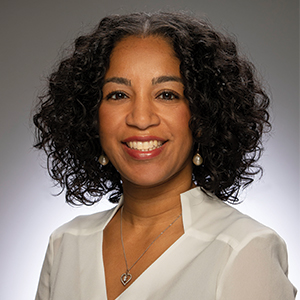
Before joining Lumina, Haywood was a visiting faculty member in the Department of Educational Leadership at Indiana State University. Prior to joining ISU, she was the managing editor for the International Journal of Qualitative Studies in Education, a research assistant at IUPUI’s Center for Urban and Multicultural Education, and an admissions counselor at Rensselaer Polytechnic Institute.
Haywood has published peer-reviewed scholarship in the areas of Latino students in higher education, microaggressions, and faculty of color. She was named a 2016 Ebony Magazine Power 100 honoree and awarded the IU Neal-Marshall Alumni Club Standard Bearer Award. She holds master’s and doctoral degrees in higher education and student affairs from Indiana University.
Jasmine Haywood
Strategy Director, Credentials of Value
Lumina Foundation
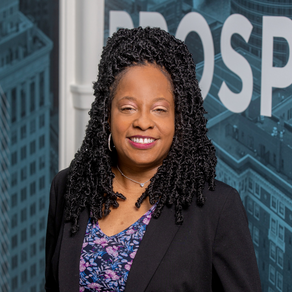
Tarita Johnson
A sought-after keynote speaker and workshop facilitator, Dr. Johnson equips executives and leaders with tools to strengthen leadership excellence, emotional intelligence, personality insights, workplace culture development, psychological safety, managing multiple generations in the workplace, inclusion, and more, all aimed at bringing out the best in people and organizations.
Recognized as one of Crain’s Grand Rapids Business Notable Black Leaders (2024), a Notable West Michigan Leader in Diversity, Equity, and Inclusion (2024), and the West Michigan Chapter of PRSA’s JEDI Communicator of the Year (2023), Dr. Johnson cultivates collaborative relationships throughout Greater Grand Rapids to grow the region’s talent bench. She serves on multiple boards, including Best & Brightest, Hello West Michigan, Michigan Colleges Alliance, STEM Greenhouse, The Source Advisory, West Michigan Works, West Michigan Tech Talent, Global Detroit Advisory, Truth’s Table Foundation, and the West Michigan Center for Arts + Technology, and is a founding member of Rockstar Women. Beyond her professional work, she ministers at Lighthouse Full Life Center, serving on the intercessory, baptism, and belonging teams.
Before joining The Right Place in 2021, Dr. Johnson was Director of Calvin University’s Career Center, Adjunct Professor, and Talent Acquisition Manager at Meijer, where she oversaw corporate recruiting for Accounting & Financial Services, Human Resources, Technology, Legal, Properties, Procurement, and Real Estate. She also served as Vice President of Colleges and University Relations at KeyBank, directing national college recruiting. Her earlier career includes roles as Assistant Director of Admissions at Baldwin Wallace University, Enrollment Management Officer at Pennsylvania State University, Psychiatric Specialist Counselor at Western Psychiatric Institute and Clinic, and Program Specialist for TRIO’s Educational Talent Search at Savannah State University.
Dr. Johnson earned her PhD in Higher Education from Azusa Pacific University, a Master of Social Work from the University of Michigan, and a Bachelor of Arts in Psychology and Social Work from Miami University. She also holds certifications in Cultural Intelligence, Unconscious Bias, DDI Targeted Selection, and Korn Ferry Leadership Architect.
TaRita Johnson
Senior Vice President, Talent & Diversity
The Right Place

Emma Jones
Emma Jones
Executive Vice President, Leadership
Carnegie

Joe Master
As Senior Vice President of Brand Management for Carnegie, Joe Master partners with institutions to build brands that resonate with emotion and authenticity. Prior to his agency work, Joe spent 13 years leading marketing and communications teams at two large Philadelphia universities—Temple University and Drexel University. Joe served as Assistant Vice President of Marketing & Digital Strategy for Drexel University on the in-house team responsible for executing the award-winning Ambition Can’t Wait national brand awareness campaign. His work has appeared in newspapers, magazines, television commercials, and on digital screens across the nation.
Joe Master
Senior Vice President of Brand Management
Carnegie
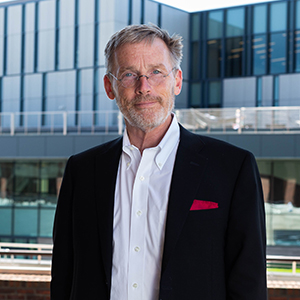
Robert McMahan
Dr. McMahan was one of four presidents highlighted in the book Governance Reconsidered, by Susan Pierce in Chapter 8 under “Exemplary Tales: Successful Presidents.”
Prior to joining Kettering, Dr. McMahan was the Founding Dean of and Professor of Engineering in the Western Carolina University College of Engineering and Technology, a role he was asked to take by the Chancellor and UNC system leadership. In this role he was charged with the creation of an innovative, but replicable, college of engineering model for regional universities centered around the development of a set of project-based, regionally-engaged engineering and technology programs.
Prior to that, while simultaneously holding the position of Research Professor of Physics and Astronomy at University of North Carolina at Chapel Hill (a position he held from 1989-2010), Dr. McMahan was Senior Advisor to the Governor of North Carolina for Science and Technology, and the Executive Director of the North Carolina Office of Science and Technology. In that role, he also acted as a Senior Advisor to the Secretary of Commerce, the General Assembly, and the Economic Development Board. He was responsible for developing and implementing the state’s technology and university-based economic development programs as well as acting as a primary liaison between the Governor’s administration and the 16-campus UNC and 58-campus NC Community College systems.
Prior to his work with the Governor, he was a Senior Technology Strategist and Venture Capitalist for In-Q-Tel, a private venture capital organization funded by the Central Intelligence Agency, where he was responsible for developing a technology investment strategy for the intelligence community, and then deriving, molding, and structuring individual investments and technologies within the portfolio in response to it.
Before joining In-Q-Tel, he was Executive Vice President of Engineering and R&D for GretagMacbeth, LLC, where he was responsible for the company’s worldwide research, engineering, and product development activities and for the creation and operation of the company’s Advanced Technology Laboratories in the Research Triangle Park. He joined GretagMacbeth after its acquisition in 2000 of MRL, the advanced technologies company he founded in Cambridge, MA and later expanded to the Research Triangle Park of North Carolina. He has been involved in the creation of a number of technology startups, and he has co-led multiple significant equity and LBO capital raises.
In addition to the above activities, Dr. McMahan has also been a visiting fellow at both Oxford University and the University of Durham. While at the University of North Carolina he led active NSF and PPARC funded research programs in astrophysics while also serving as the sole science advisor to the university’s advanced 4-meter telescope project (SOAR) in Chile. He has also held a number of other academic appointments, including Adjunct Professor at the North Carolina State University and Visiting Assistant Professor at Dartmouth.
He received dual Bachelors’ Degrees in Physics and in the History of Art from Duke University, a Ph.D. in Physics from Dartmouth, and completed postdoctoral studies at the Harvard University – Smithsonian Astrophysical Observatory Center for Astrophysics under the mentorship of MacArthur Fellow Margaret Geller, where he also held an appointment as an Astrophysicist at the Smithsonian Institution. He has completed executive leadership programs at the Harvard Kennedy School and the Harvard Graduate School of Education.
Dr. McMahan has extensive national and international speaking, consulting, and management experience in organizations and initiatives related to technology and product development, research policy, investment capital, entrepreneurship and innovation-based economic development. He has spoken and consulted with national and international organizations interested in innovation policy, investment capital, technology based economic development, university research, and the university’s role in economic development at the invitation of organizations including the National Academies, the US Congress, and the Federal Reserve as well as a number of international governments.
Dr. McMahan participated in research that led to the cosmological discoveries of the “Great Attractor,” as well as the “bubble and void” structure of the universe and the “Great Wall,” the latter of which at the time of discovery was the largest known structure in the universe. These are now foundational elements of modern dark matter theory. He has published over fifty papers in scientific and engineering journals, sits on a number of corporate boards and state and national commissions, and holds multiple domestic and international patents.
Dr. McMahan has led the University through a transformational decade, described in this special edition of Kettering Magazine.
Robert McMahan
President
Kettering University

Joretta Nelson
She brings a similar approach to higher education leadership and strategy. In Joretta’s work with Carnegie clients, she empowers institutions and their staff to integrate their strengths, co-creating solutions to deliver results that transform student outcomes
Her background as both a faculty member and administrator on campuses helps her inspire campus leaders to face challenges and develop holistic solutions for student success. She engages her passion for identifying and cultivating the talent of others through her work as a presidential advisor and leadership coach.
Joretta Nelson
Senior Executive Advisor, Strategy & Student Success
Carnegie

Eric Page
Eric Page brings a bold approach to clients’ enrollment solutions, propelled by his 15+ years of experience leading and executing cutting-edge communications and marketing strategies. He has expertise across the board, including in strategic planning, organizational dynamics, higher education enrollment and marketing, media and public relations, digital marketing, social media, website design, storytelling, and content marketing strategy. Eric previously led the admission recruitment and marketing team at the University of Iowa, where he engineered a 17% growth in enrollment over a two-year period.
Eric Page
Chief Client Officer
Carnegie

Dakota Pawlicki
Prior to this role, Dakota was a strategy officer with Lumina Foundation, a senior district administrator at Chicago Public Schools, founder and executive director of a teacher preparation nonprofit, university program administrator, and music teacher. His education and professional experience is multi-disciplinary, blending fine arts, K12 and higher education, economic development, design thinking, and placemaking into a cohesive approach to tackle complex social challenges. He believes that the greatest change happens at the local and regional level, and is a champion of participatory governance that shifts power to self-determined communities that work collaboratively to improve the place they call home. He holds degrees in education and public administration, and lives with his wife Dr. Colleen Pawlicki and dog Otis in Indianapolis. On his off days, you can find him playing the tuba, riding his motorcycle, volunteering in his neighborhood, or doing anything else that gets him out of yard work.
Dakota Pawlicki
Director, Talent Hubs
CivicLab
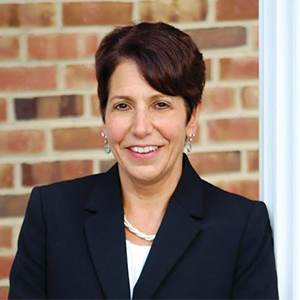
Lillian Schumacher
During her tenure, the University has achieved many firsts, including the first eSports and women’s wrestling programs in Ohio, the Center for Cyber Defense and Forensics designation by the Department of Homeland Security and the National Security Agency, the Performing Arts Laboratory (PAL), a state-of-the-art Center for Science and Technology academic building and the Center for Innovation and Learning, which will open fall 2025.
Her continued focus for Tiffin University remains to strategically position Tiffin University for sustained success in today’s ever-changing world of higher education; to transform the institution in areas of global mindset through comprehensive cultural and inclusion institutional identity; and to become a model example of strategic private higher education innovation through expansive alliance with other universities, consortiums and organizational partnerships.
Prior to her presidency, she was an integral part of the University since 2010, first as Dean of the School of Business and more recently as Vice President for Academic Affairs.
A natural leader who has experience and academic training in leadership, Dr. Schumacher has over 35 years of expertise in higher education and corporate environments in areas of strategic leadership, program development, outcomes assessment and accreditation, teaching and fundraising.
With over 25 years of serving as an organizational consultant in areas of leadership development, global thinking, executive coaching, strategic planning, human resources, career coaching and change management, Dr. Schumacher believes in an organizational culture that embraces mutual respect, accountability, intentional actions, cultural inclusion and clear decision-making aligned with organizational values. Dr. Schumacher is an author, trained consultant and executive coach specializing in the Emotional and Social Competency Inventory (ESCI), Cultural Intelligence (CQ) Assessment, DiSC Personal Profile Systems and Franklin Covey’s Four Disciplines of Execution. She has consulted with both national and international companies.
She has demonstrated her ability to manage and advocate change processes in higher educational and corporate settings and is a highly motivated, results-oriented professional with an approachable leadership style and a strong work ethic marked by dedication, initiative, integrity and professionalism.
Dr. Schumacher served as Board Director for Webster Industries and the Tiffin-Seneca Economic Partnership. She is Past President of the Industrial Management Council and has served in various leadership positions for the Accreditation Council for Business Schools and Programs (ACBSP). She also served on the Board of Directors for the National Association of Independent Colleges and Universities (NAICU) and currently serves on the Association for Independent Colleges and Universities in Ohio (AICUO) as well as the Ohio Foundation of Independent Colleges (OFIC).
A true Renaissance woman who knows that technology has placed the world at our fingertips, President Schumacher is actively involved in the global aspect of education, having served as a board member for the European Council for Business Education (ECBE) until December 2016. She is now striving to integrate global diversity into curricular and extra-curricular experiences for all Tiffin University students.
Dr. Schumacher holds a doctorate in leadership studies, a master’s in organization development, and a master’s in higher education administration all from Bowling Green State University in Bowling Green, Ohio. She earned her bachelor’s degree in economics from Allegheny College in Meadville, Pennsylvania.
Lillian Schumacher
President
Tiffin University
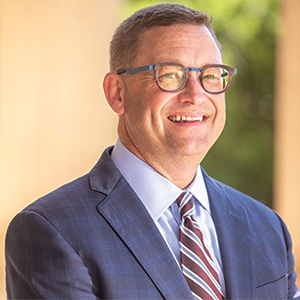
Frank Shushok
Under President Shushok’s leadership, the College launched Imagine Roanoke, a bold strategic plan that builds on nearly two centuries of tradition while embracing the needs of today’s learners. Two key imperatives include the creation of four transdisciplinary schools that promote integrated, careerconnected learning, and the transformation of Roanoke’s residential campus into a 21st-century learning laboratory that fosters belonging, leadership, character, and purpose. A signature initiative of the plan is Roanoke College–Roanoke Valley (RC-RV), a partner endeavor to expand access to continuing education, workforce development, and community-based learning. RC-RV deepens collaboration with local industry, K–12 schools, community colleges, and government agencies to align education with regional economic needs. By bridging campus and community, it fosters shared solutions, grows local talent, and strengthens the region’s future.
A small college on the move, Roanoke College has recently launched new undergraduate and graduate programs; begun construction on the McConnon Discovery Center—a cutting edge science facility; and expanded access and opportunities for learners through partnerships with regional community colleges and graduate programs at colleges and universities across the Commonwealth. It has also revitalized student life, school spirit, and community engagement through new co-curricular offerings, including the return of football to Roanoke after 82 years, along with new marching band and competitive cheer programs.
President Shushok came to Roanoke College with over 30 years experience in higher education. Immediately prior to coming to Roanoke College, Shushok served 13 years in several executive roles at Virginia Tech, including Vice President of Student Affairs. He was also a tenured professor in the College of Agriculture and Life Science. Early on he served at his alma mater, Baylor University, in several capacities, including dean for student learning and engagement, associate dean for Campus Living and Learning, and was a faculty member and program director for the graduate program in Higher Education and Student Affairs.
Shushok holds a B.S. in history from Baylor University, an M.A. in higher education and student affairs administration from The Ohio State University, and a Ph.D. in higher education policy, planning and analysis from the University of Maryland, College Park. Shushok and his spouse, Kelly, are high school sweethearts who have been married for over 30 years. Reverend Shushok has served more than 20 years in ministry, most recently as pastor at “edges,” a progressive United Methodist community in Blacksburg. Together, they have three adult children and two lovable dogs, Maple, and her daughter, Magnolia who are dedicated Maroons!
First Lady Rev. Kelly Shushok
Rev. Kelly Shushok is putting her strengths to work in the Roanoke College community.
About Kelly Shushok
Frank Shushok
President
Roanoke College


Michael Sorrell
Included among Paul Quinn’s numerous accomplishments during President Sorrell’s tenure are the following: improving graduation rates by more than 30%; reducing the average student loan debt by $30,0000; building the first new buildings on campus in 50 years; creating the Urban Work College Model; partnering with Dallas Independent School District and KIPP Charter Schools to open two secondary schools on the PQC campus; winning the HBCU of the Year, HBCU Student Government Association of the Year, and HBCU Business Program of the Year awards; demolishing 16 campus buildings; partnering with PepsiCo to transform the football field into the WE over Me Farm; achieving full-accreditation from the Transnational Association of Christian Colleges and Schools (TRACS); creating the College’s first faculty-led study abroad program; and rewriting all institutional fundraising records.
Dr. Sorrell is one of the most recognized college presidents in America. Among the honors he has received are the following: the President George W. Bush Institute’s Trailblazer Citation; Fortune Magazine named him one of the World’s 50 Greatest Leaders; being the only three-time recipient of the HBCU Male President of the Year Award; winning Education Dive’s Higher Education’s President of the Year award; and being listed by Time Magazine as one of the “31 People Changing the South.”
Michael received his J.D. and M.A. in Public Policy from Duke University and his Ed.D. from the University of Pennsylvania. Michael was a recipient of a Sloan Foundation Graduate Fellowship, which funded his studies at both Harvard University’s Kennedy School of Government (as a graduate fellow) and Duke University. He graduated from Oberlin College with a B.A. in Government and captained the men’s varsity basketball team twice.
President Sorrell is a trustee for College Track and the Graduate School of Education at the University of Pennsylvania. Michael is also a member of the advisory boards of Advancing Black Pathways (JPMC), GSV, and Amegy Bank. He is a corporate director for Mainstay. Dr. Sorrell has served as the chair of the Board of Governors for the Dallas Foundation and co-chair for the Aspen Prize. He has also been a trustee for the American Council of Education.
President Sorrell is married to the former Natalie Jenkins. Natalie is an alumna of Spelman College and the Wharton School at the University of Pennsylvania. They have two children, Michael Augustus and Sage Louise-Sinclair.
Michael Sorrell
President
Paul Quinn College
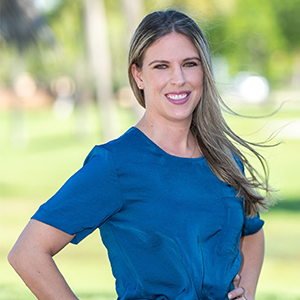
Emily West
Emily West
Senior Vice President
Policy & Initiatives
Greater Washington Partnership
Agenda to Date
as of May 5, 2026
The Jobs to Be Done of the University
Universities often struggle to articulate their value in ways that resonate with the full range of what students are actually seeking. This is especially problematic in a world where various constituents are seeking clear returns on the investment in an institution.
Drawing on Clayton Christensen’s jobs-to-be-done framework, Peter Boumgarden (WashU, Professor & Assistant Vice Provost of Undergraduate Education) will invite university leaders to reframe their institution’s value proposition around two dimensions of student motivation: the vocational—the concrete progress students are trying to make in their careers and capabilities—and the existential—the deeper search for meaning, identity, and a life well-lived. Together, these lenses offer a more honest and more compelling basis for differentiation, one grounded not in what universities want to say about themselves, but in what students are genuinely trying to accomplish.
More detail about this year’s management model, including a program workbook, will follow.
Supporting Context:
How Will You Measure Your Life?
Jobs to be Done Theory
Know Your Customers’ “Jobs to Be Done”
2:00 – 5:00 PM – Welcome Packages Available for Pickup
5:45 – 8:30 PM – Opening Dinner and Program
Welcome
Speaker: Bob Bartlett, Mackinac Roundtable on Talent Planning Committee
Keynote: “Strategy, Distinction, and Storytelling in an ROI Environment”
Speaker: Dave Clayton, Strada Education Foundation
8:35 – 9:35 PM – Afterglow
Our thanks to Warner Norcross + Judd for their support of this special reception
7:30 – 8:30 AM – Academic Leader Breakfast Sessions
Monday’s programming will begin with a series of affinity breakfasts for academic leaders. Topics to be announced.
9:00 – 4:00 PM – Mackinac Roundtable on Talent Session
Welcome and Overview
Facilitator: Peter Boumgarden, Olin Business School at Washington University in St. Louis
Public Perceptions of ROI in Higher Education
Moderator: Rebecca Ehretsman, Wartburg College
Speaker: William Conyers, Protagonist; Sydney Apple, Protagonist; Liz Gross, Campus Sonar
This year’s Roundtable dialogue will begin with an empirical examination of public perceptions of college value. Experts in public opinion research will explore evolving expectations surrounding higher education outcomes and the growing demand for demonstrable return on investment. The session will also examine how both traditional and social media are shaping the broader public narrative around the value of a college degree.
Uncovering Distinction: Institutional Identity and Your Value Proposition
Speakers: Joe Master, Carnegie and Eric Page, Carnegie
Institutional identity is foundational to sustainable distinction. In this psychographic-based archetypes workshop, leaders will examine the fundamental personality of their college or university—where it stands today, what it aspires to become, and what it must avoid becoming. Participants will explore how institutional storytelling can be strengthened through archetype clarity and consider how personality misalignment can dilute institutional value proposition.
Employer Voices on Graduate Career Readiness
Moderator: Seth Bushouse, Gentex
Panelists: Chris Groscurth, Stryker; TaRita Johnson, The Right Place; Swapna Soman, JR Automation
Career advancement has long been a central promise of American higher education and a primary motivation for students and parents alike. Today, rapid technological change, shortened business cycles, and emerging alternatives to traditional degree pathways are reshaping labor market demands across industries and sectors.
This panel will examine student career readiness from an employer perspective and inform Roundtable discussions about what must evolve—in the classroom and beyond—to better align institutional strategy with workforce expectations.
Luncheon Program – The Cost of Confusion: Pricing Transparency as a Brand and Affordability Strategy
Speaker: Justin Draeger, Strada Education Foundation
Public confusion around college pricing continues to shape perceptions of value, affordability, and trust. New data on how families perceive college cost reveals a clear strategic opportunity: institutions that pair pricing transparency with crisp storytelling not only stand out, but rebuild the trust that drives enrollment. This session will examine how pricing strategy and communication intersect—and what it takes for leaders to align affordability, brand, and enrollment in an increasingly skeptical market.
Degrees That Deliver: How Cross-Sector Partnerships Strengthen Student Value
Discussion Leaders: Jasmine Haywood, Lumina Foundation and David Croom, JP Morgan Chase
Panelists: Dakota Pawlicki, CivicLab; Emily West, Greater Washington Partnership; Mike Lauber, Tusco Manufacturing
Public skepticism about the value of a bachelor’s degree is growing, with students and families asking harder questions about cost, outcomes, and career pathways. In this environment, institutions are under increasing pressure to demonstrate clear return on investment. One powerful response is deeper collaboration between higher education, employers, and regional talent partners. When colleges engage employers not simply as advisors but as partners in shaping talent pipelines, they can create stronger pathways from college to career while reinforcing the value of a degree. This session will explore how independent colleges can play a catalytic role in regional talent ecosystems and what it takes for presidents to initiate and scale partnerships that strengthen student outcomes, institutional relevance, and public confidence.
Career Readiness and the Student Experience
Discussion Leader: Joretta Nelson, Carnegie
Panelists: Frank Shushok, Roanoke College; Lillian Schumacher, Tiffin University; and Robert McMahan, Kettering University
College-to-career readiness is increasingly central to institutional value proposition. How do you know that you are delivering on that brand promise to students? In this session, you’ll hear from student success experts and higher education leaders on integrating career readiness into the student experience as an institutional differentiator.
5:30 – 6:30 PM – Cocktail and Networking Reception on the Porch
6:30 PM – Attendees and Guests Depart for Dinner
Enjoy dinner with family, friends, and colleagues in Grand Hotel’s Main Dining Room, Jockey Club, or Gate House, or elsewhere on the Island.
8:00 – 11:00 AM – Mackinac Roundtable on Talent Closing Session
Welcome
Facilitator: Peter Boumgarden, Olin Business School at Washington University in St. Louis
Breakfast Keynote: The Paul Quinn College Story
Speaker: Michael Sorrell, Paul Quinn College
Under President Michael Sorrell’s leadership, Paul Quinn College transformed from a struggling institution facing financial instability, declining enrollment, and low campus morale into a nationally recognized model for innovation and institutional reinvention. During this period, enrollment increased more than 200%.
Sorrell strengthened the college’s financial foundation, elevated academic standards, and launched the nation’s first Urban Work College model—integrating paid work experience into every student’s education. His leadership offers a powerful example of how mission clarity, strategic focus, and bold decision-making can redefine institutional value.
Aligning Institutional Strategy & Brand Strategy for ROI Impact
Speakers: Emma Jones, Carnegie and Joe Master, Carnegie
In an ROI environment, strategy and storytelling go hand-in-hand. But institutional strategy and brand strategy are often siloed and disconnected. When integrated, they can create powerful alignment across an institution. This interactive session will explore how maximizing the internal and external intersections of institutional strategy and brand strategy can build institutional momentum, improve leadership decision-making, and drive lasting impact.
Capturing Roundtable Takeaways and Action Plans
Speaker: Peter Boumgarden, Olin Business School at Washington University in St. Louis
Building on the Jobs to Be Done of the University framework, presidents will return to their workbook reflections and translate insight into action. In facilitated table discussions, participants will refine one high-impact strategy that strengthens their institution’s ability to deliver on both the vocational and existential dimensions of student motivation. Each table will sharpen its thinking into a clear, differentiated concept ready for peer review.
Bringing It All Together
Speaker: Peter Boumgarden, Olin Business School at Washington University in St. Louis
In a dynamic, real-time session, Peter will review submitted action concepts, draw out standout ideas, and engage their authors in peer dialogue. Using live polling, participants will surface the most compelling strategies—leaving with informed, peer-vetted approaches to strategy, distinction, and storytelling in an ROI environment.
Program Wrap Up
Speakers: Peter Boumgarden, Olin Business School at Washington University in St. Louis; Bob Bartlett, Mackinac Roundtable on Talent
About Grand Hotel and Mackinac Island
The Roundtable is held annually at the Grand Hotel on Mackinac Island.
Nestled in the pristine waters of Lake Huron between Michigan’s upper and lower peninsulas, Mackinac Island is a captivating destination where time slows down and natural beauty abounds. Named the “#1 Summer Travel Destination in the US” by USA Today in 2025, Mackinac Island offers a serene and picturesque retreat. The Island is unique as it is primarily accessible by ferry, allows no motorized vehicles, and island transportation is exclusively horse and carriage.
At its heart stands the iconic Grand Hotel, a National Historic Landmark renowned for its stunning views, world-class hospitality, and the world’s longest porch. Grand Hotel was recently named one of “The 25 Most Iconic Hotels to Visit on Earth” by Elle Decor. With its elegant Victorian architecture and timeless allure, the Grand Hotel provides an inspiring setting for the Mackinac Roundtable on Talent.
Many Roundtable attendees bring guests and family members and enjoy all that Mackinac Island and Grand Hotel have to offer.

Association Partners















2026 Event Sponsors